

LiveLine vs Embedded Fiber Lines for Cable Cam Signal Transmission
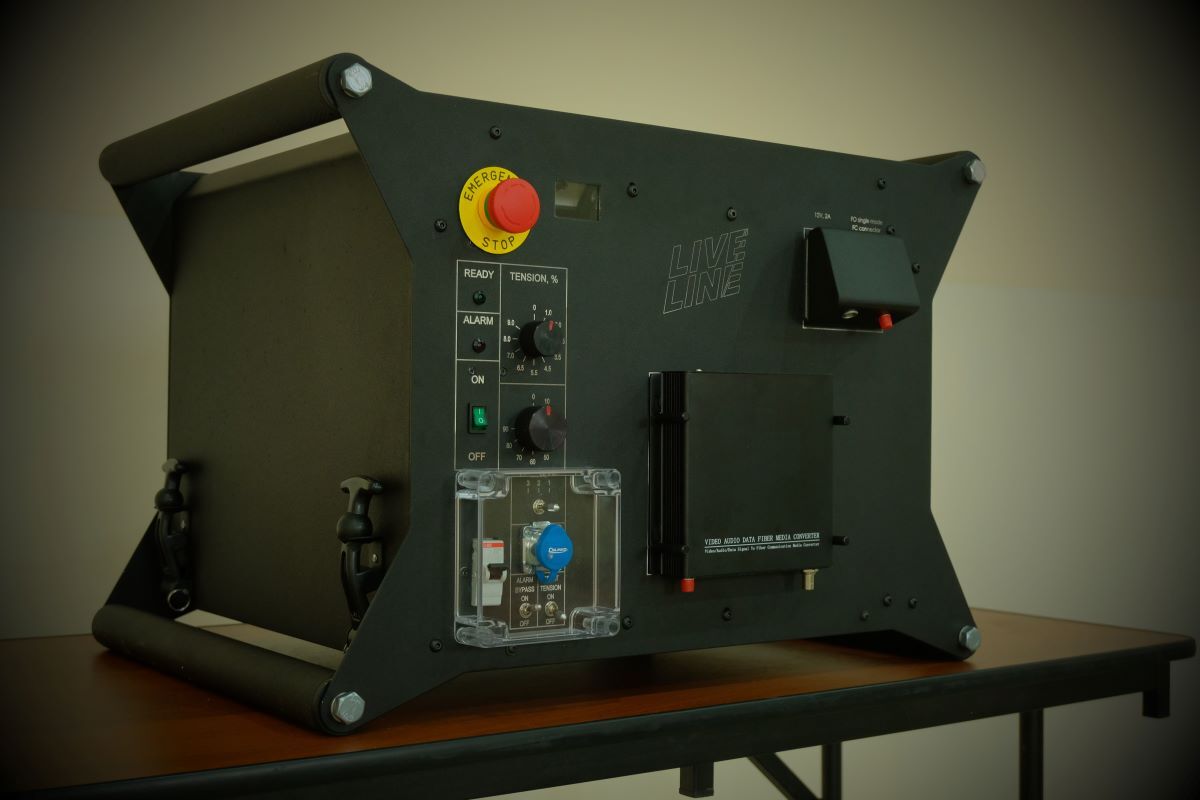
JoyMechanix can deliver cable cam systems with fiber optics embedded directly into the main lines, but this is not the standard recommendation. For most professional 3D cable cam systems, JoyMechanix uses 5th winch LiveLine as a dedicated fiber winch because it gives the fiber cable a safer working condition, longer service life, and lower long-term replacement cost.
The difference between LiveLine and embedded fiber is where the fiber is placed: inside the main load-bearing cable cam lines, or on a separate dedicated line managed by its own winch (5th winch).
The difference between LiveLine and embedded fiber is where the fiber is placed: inside the main load-bearing cable cam lines, or on a separate dedicated line managed by its own winch (5th winch).
Article scope
This article compares two ways to manage fiber-optic signal transmission in professional cable cam systems.
The first approach is embedding fiber optics directly into the main winch lines. The second approach is using JoyMechanix LiveLine as a dedicated fifth winch for fiber signal transmission.
Both approaches are technically possible. The difference is long-term reliability, cable handling, replacement cost, and how the system behaves in real production environments.
The first approach is embedding fiber optics directly into the main winch lines. The second approach is using JoyMechanix LiveLine as a dedicated fifth winch for fiber signal transmission.
Both approaches are technically possible. The difference is long-term reliability, cable handling, replacement cost, and how the system behaves in real production environments.
The two possible approaches
There are two main ways to bring fiber transmission into a cable cam system.
The first option is embedded fiber lines. In this setup, fiber optics are built directly into the main cable cam lines. These lines are part of the primary working system and are handled together with the main load-bearing cables during rigging, transport, operation, and strike.
The second option is LiveLine as a dedicated fiber winch. In this setup, a separate fifth winch manages an independent fiber-optic cable in the cable cam system setup. The LiveLine cable is not one of the main load-bearing lines. It is managed separately and kept under controlled low tension.
Both options can transmit signal. The reason JoyMechanix normally recommends LiveLine is that it protects the fiber cable better during repeated use.
The first option is embedded fiber lines. In this setup, fiber optics are built directly into the main cable cam lines. These lines are part of the primary working system and are handled together with the main load-bearing cables during rigging, transport, operation, and strike.
The second option is LiveLine as a dedicated fiber winch. In this setup, a separate fifth winch manages an independent fiber-optic cable in the cable cam system setup. The LiveLine cable is not one of the main load-bearing lines. It is managed separately and kept under controlled low tension.
Both options can transmit signal. The reason JoyMechanix normally recommends LiveLine is that it protects the fiber cable better during repeated use.
Why embedded fiber lines are not our standard approach
Embedding fiber into the main cable cam lines can seem attractive at first. The signal path is built into the cable set, and the system may look cleaner because there is no additional dedicated fiber line and no additional winch.
The issue is not whether embedded fiber can work. It can. The issue is how long it remains reliable in real production conditions.
Cable cam lines are exposed to demanding handling during setup and transport. They may be bent, dragged, coiled, dropped, stepped on, packed quickly, or handled under time pressure. This is especially common in rental work, stadium installations, temporary event setups, and live production environments.
The system owner does not always control every handling step. Local rigging crews, venue teams, and production technicians often work quickly, especially during load-in and load-out. Even with good procedures, the main lines are exposed to physical stress.
Fiber optics are sensitive to this type of stress. When fiber is embedded inside the main lines, it becomes exposed to the same handling risks as the load-bearing cable.
Common risk factors include:
In demanding rental and live production environments, embedded fiber lines may require replacement after a relatively small number of projects, depending on handling conditions. Since specialized fiber-equipped lines can be expensive per meter, replacement cost can become a serious part of the total cost of ownership.
The issue is not whether embedded fiber can work. It can. The issue is how long it remains reliable in real production conditions.
Cable cam lines are exposed to demanding handling during setup and transport. They may be bent, dragged, coiled, dropped, stepped on, packed quickly, or handled under time pressure. This is especially common in rental work, stadium installations, temporary event setups, and live production environments.
The system owner does not always control every handling step. Local rigging crews, venue teams, and production technicians often work quickly, especially during load-in and load-out. Even with good procedures, the main lines are exposed to physical stress.
Fiber optics are sensitive to this type of stress. When fiber is embedded inside the main lines, it becomes exposed to the same handling risks as the load-bearing cable.
Common risk factors include:
- repeated bending during rigging and packing
- dragging or dropping during setup
- rough handling during temporary installations
- pressure from tight production schedules
- damage during transport or storage
- expensive replacement when the fiber path fails
In demanding rental and live production environments, embedded fiber lines may require replacement after a relatively small number of projects, depending on handling conditions. Since specialized fiber-equipped lines can be expensive per meter, replacement cost can become a serious part of the total cost of ownership.
How LiveLine works as a dedicated fiber winch
LiveLine was developed to solve this practical reliability problem.
Instead of placing the fiber inside the main load-bearing cable cam lines, LiveLine uses a separate fiber-optic cable managed by its own winch. In a 3D cable cam setup, it works as a dedicated fifth winch for signal transmission and, depending on configuration, power transmission.
The key advantage is separation.
The LiveLine cable is not part of the main load-bearing cable set. It is not exposed to the same forces, handling patterns, or mechanical stress as the primary winch lines. The system automatically controls the cable tension and keeps it low during operation.
This gives several practical benefits:
Because the LiveLine cable is managed separately, it can be treated more carefully during setup, operation, and packing. This is the main reason it usually lasts much longer than fiber embedded into the main lines.
Instead of placing the fiber inside the main load-bearing cable cam lines, LiveLine uses a separate fiber-optic cable managed by its own winch. In a 3D cable cam setup, it works as a dedicated fifth winch for signal transmission and, depending on configuration, power transmission.
The key advantage is separation.
The LiveLine cable is not part of the main load-bearing cable set. It is not exposed to the same forces, handling patterns, or mechanical stress as the primary winch lines. The system automatically controls the cable tension and keeps it low during operation.
This gives several practical benefits:
- the fiber cable is independent from the main load-bearing lines
- the cable works under low controlled tension
- the fiber is easier to protect during rigging
- handling is more predictable
- the cable is not exposed to the same stress as the main lines
- replacement frequency is reduced
- long-term operating cost is lower
Because the LiveLine cable is managed separately, it can be treated more carefully during setup, operation, and packing. This is the main reason it usually lasts much longer than fiber embedded into the main lines.
Why a dedicated fiber winch is more reliable in practice
At first, embedded fiber may look like a more redundant solution. If fiber is built into several main lines, it may seem that the system has multiple possible signal paths.
In practice, redundancy only helps if the signal paths remain stable.
If the fiber is placed inside lines that are frequently bent, dragged, dropped, or handled roughly, the system may face repeated cable damage. In that case, redundancy becomes a response to a failure pattern that the design itself makes more likely.
LiveLine takes the opposite approach. It reduces the risk of fiber damage from the beginning.
Instead of placing delicate fiber inside heavily handled cable cam lines, LiveLine gives the fiber its own dedicated path with controlled tension and separate handling. A single well-managed fiber line can be more practical than multiple embedded fiber paths that are exposed to higher mechanical stress.
This is why JoyMechanix uses LiveLine as the standard solution for most projects.
In practice, redundancy only helps if the signal paths remain stable.
If the fiber is placed inside lines that are frequently bent, dragged, dropped, or handled roughly, the system may face repeated cable damage. In that case, redundancy becomes a response to a failure pattern that the design itself makes more likely.
LiveLine takes the opposite approach. It reduces the risk of fiber damage from the beginning.
Instead of placing delicate fiber inside heavily handled cable cam lines, LiveLine gives the fiber its own dedicated path with controlled tension and separate handling. A single well-managed fiber line can be more practical than multiple embedded fiber paths that are exposed to higher mechanical stress.
This is why JoyMechanix uses LiveLine as the standard solution for most projects.
Lifecycle cost and replacement planning
Signal transmission should be evaluated by lifecycle cost, not only by initial configuration.
The cost of a fiber solution includes more than the first installation. It also includes replacement cables, troubleshooting time, crew delays, transport damage, emergency repairs, and production risk.
Embedded fiber lines can increase lifecycle cost if they need frequent replacement. Even if the initial design looks clean, the long-term cost can rise quickly when specialized lines are damaged.
LiveLine is designed to extend the useful life of the fiber cable.
In many production environments, a LiveLine cable can reliably serve dozens of projects. For many clients, it can exceed 50 projects, and in favorable handling conditions it may exceed 100 projects. Exact lifespan depends on crew discipline, storage, transport, operating environment, and project type, but the reliability profile is much stronger because the fiber is not inside the main load-bearing lines.
The result is fewer failures, lower replacement cost, and a more predictable signal workflow.
The cost of a fiber solution includes more than the first installation. It also includes replacement cables, troubleshooting time, crew delays, transport damage, emergency repairs, and production risk.
Embedded fiber lines can increase lifecycle cost if they need frequent replacement. Even if the initial design looks clean, the long-term cost can rise quickly when specialized lines are damaged.
LiveLine is designed to extend the useful life of the fiber cable.
In many production environments, a LiveLine cable can reliably serve dozens of projects. For many clients, it can exceed 50 projects, and in favorable handling conditions it may exceed 100 projects. Exact lifespan depends on crew discipline, storage, transport, operating environment, and project type, but the reliability profile is much stronger because the fiber is not inside the main load-bearing lines.
The result is fewer failures, lower replacement cost, and a more predictable signal workflow.
When embedded fiber can still be used
Embedded fiber is still possible.
If a client has a strict technical requirement, venue specification, or integration reason that requires fiber inside the main cable cam lines, JoyMechanix can evaluate and manufacture that configuration.
However, it should be treated as a special requirement rather than the default choice.
Before choosing embedded fiber, the buyer should consider:
For a permanent installation with controlled handling, embedded fiber may be more manageable. For rental work, temporary installations, stadium projects, and frequent live production use, LiveLine is usually the more reliable and cost-effective approach.
If a client has a strict technical requirement, venue specification, or integration reason that requires fiber inside the main cable cam lines, JoyMechanix can evaluate and manufacture that configuration.
However, it should be treated as a special requirement rather than the default choice.
Before choosing embedded fiber, the buyer should consider:
- how often the system will be rigged and moved
- whether the system is rental or permanent
- who will handle the lines during setup
- how carefully the lines can be stored and transported
- expected replacement cost
- total cable length
- acceptable downtime risk
- whether redundancy is solving a real problem or compensating for cable vulnerability
For a permanent installation with controlled handling, embedded fiber may be more manageable. For rental work, temporary installations, stadium projects, and frequent live production use, LiveLine is usually the more reliable and cost-effective approach.
Key takeaways
- The comparison is not LiveLine versus fiber. LiveLine is a fiber-based solution.
- The real choice is between a dedicated LiveLine fiber winch and fiber embedded inside the main cable cam lines.
- Embedded fiber lines are technically possible, but they are exposed to the same bending, dragging, dropping, and handling stress as the main load-bearing lines.
- LiveLine uses a separate fiber-optic cable managed by its own winch under low controlled tension.
- A dedicated fiber winch usually gives better reliability, longer cable life, and lower long-term replacement cost.
- Embedded fiber can still be supplied when a project has a strict technical requirement, but LiveLine is the standard recommendation for most applications.
FAQ
Is LiveLine a fiber solution?
Yes. LiveLine is a fiber-based solution. The difference is that the fiber is carried on a separate dedicated line managed by its own winch, rather than embedded inside the main cable cam lines.
Can JoyMechanix embed fiber optics into the main cable cam lines?
Yes. JoyMechanix can manufacture cable cam systems with fiber optics embedded into the main lines if a project requires it. However, this is not the standard recommendation for most applications.
Why does JoyMechanix usually recommend LiveLine?
JoyMechanix usually recommends LiveLine because it protects the fiber cable better. The cable is independent from the main load-bearing lines and works under low controlled tension, which reduces mechanical stress and improves long-term reliability.
Why are embedded fiber lines more vulnerable?
Embedded fiber lines are handled together with the main cable cam lines. During rigging and transport, they may be bent, dragged, dropped, packed quickly, or exposed to rough handling. Fiber optics are sensitive to this type of mechanical stress.
Is embedded fiber more redundant?
It can appear more redundant because fiber can be placed inside multiple lines. However, redundancy is only useful if the signal paths remain reliable. If embedded fiber is frequently damaged, the system owner may face higher replacement cost and more downtime.
Does LiveLine also transmit power?
Depending on configuration, LiveLine can support signal transmission and power transmission. For this article, the main comparison is focused on fiber signal transmission.
Which option is better for rental companies?
LiveLine is usually better for rental companies because rental systems are rigged, moved, packed, and handled frequently. A dedicated fiber winch gives better protection and usually lower long-term replacement cost.
When should embedded fiber be considered?
Embedded fiber should be considered when a client has a strict technical requirement, a specific venue standard, or a permanent installation with highly controlled handling conditions.
Conclusion
LiveLine and embedded fiber lines are both fiber transmission approaches. The difference is not whether fiber is used. The difference is how the fiber is protected.
Embedded fiber places the fiber inside the main cable cam lines, where it is exposed to the same handling and mechanical stress as the load-bearing system. This can reduce cable life and increase replacement cost in demanding production environments.
LiveLine separates the fiber from the main cable set. As a dedicated fifth winch, it manages the fiber-optic cable under low controlled tension and gives the signal path a much safer operating condition.
For most cable cam projects, LiveLine provides the better balance of durability, reliability, performance, and long-term cost. Embedded fiber can still be supplied when required, but it should be selected only when there is a clear technical reason for using it.
Embedded fiber places the fiber inside the main cable cam lines, where it is exposed to the same handling and mechanical stress as the load-bearing system. This can reduce cable life and increase replacement cost in demanding production environments.
LiveLine separates the fiber from the main cable set. As a dedicated fifth winch, it manages the fiber-optic cable under low controlled tension and gives the signal path a much safer operating condition.
For most cable cam projects, LiveLine provides the better balance of durability, reliability, performance, and long-term cost. Embedded fiber can still be supplied when required, but it should be selected only when there is a clear technical reason for using it.