

CABLE CAM SYSTEMS FAQ
LiveLine 5th winch vs fiber embedded in the lines: reliability, handling, and long-term cost
Both approaches work - you can run fiber inside the load-bearing lines, or you can use LiveLine as a dedicated “5th winch” line for signal (and power, if needed). In real productions, the key difference is durability: embedded fiber lines tend to get damaged during fast rigging and repeated handling, while a dedicated, low-tension LiveLine cable is easier to protect and usually delivers a longer service life.
Article Scope
This article explains the practical trade-offs between embedded fiber in the main winch lines and a separate LiveLine 5th winch: failure risk during rigging, replacement cost drivers, and why “redundancy” can backfire if the cable itself becomes the weak point. It reflects typical field handling realities, but it is not a guarantee of cable lifespan - actual longevity depends on crew practices, venue conditions, transport, and how the system is rigged and stored.
LiveLine the 5th winch vs fibers embedded in the lines
One of the common questions regarding 3D cable cam systems is whether to use a fifth winch LiveLine for fiber transmission or to embed fiber optics directly into the winch lines.
Technically, both options are possible. We do have the capability to manufacture systems with fibers embedded into the lines, and if this is a strict requirement, we can deliver it. However, this is not our standard approach, and the reason comes down to reliability and long-term cost.
In real production environments, cables go through a lot during rigging. They are bent, handled roughly, and often dropped on the ground from the huge height. This is typically outside the direct control of the system owner, as rigging crews work under time pressure. Because of this, fibers embedded inside the lines are very exposed to damage. In practice, their lifespan is often limited to around five to ten projects. Considering that such cables can cost more than $10 per meter, replacement quickly becomes very expensive.
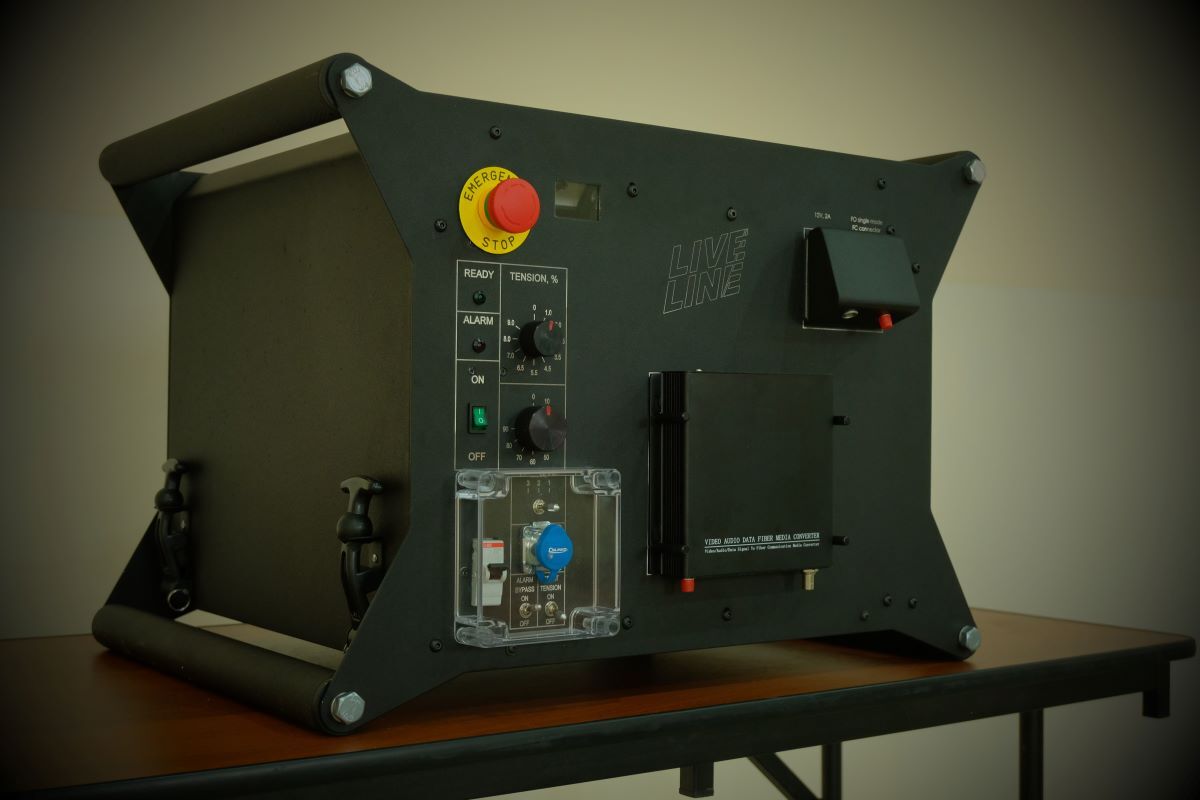
To solve this, we developed the fifth winch approach. This is a separate, dedicated line that carries the fiber. The system automatically controls the tension on this cable, keeping it below 10 kg of force. Because the load is minimal and the cable is independent from the main load-bearing lines, it is much better protected and easier to handle carefully during setup.
As a result, the lifespan of the fiber cable in a 5th winch configuration is significantly longer. In most cases, it reliably lasts for 50+ projects, and for many clients, it exceeds 100 projects without issues.
Based on this experience, we chose the LiveLine as the standard solution. It provides a much higher level of reliability over time while also being more cost-effective. Even though embedded fibers might seem like a more redundant solution with multiple lines, in practice the need for redundancy comes from frequent cable failures. When the cable itself is stable and long-lasting, a single well-managed LiveLine becomes the more practical and efficient approach.
If required, embedded fiber solutions can still be provided, but for most applications, the LiveLine offers the best balance of durability, performance, and cost.
What happens if the LiveLine fails?
The LiveLine was specifically developed to improve long-term reliability. Unlike systems where fibers are embedded directly into load-bearing ropes, our LiveLine uses an independent tension-controlled system that prevents excessive loading of the communication cable.
In practice, this has resulted in extremely high reliability. The only cable replacements we typically see are caused by accidental external damage during rigging rather than operational wear.
We can supply embedded-fiber main winches if required, but we generally do not recommend them due to their significantly higher cost and more frequent replacement requirements. A standard set of 4 winches’ ropes with LiveLine cable costs approximately USD 4,000 altogether, while embedded-fiber ropes can exceed USD 15,000 per system and require around 4-times more often replacement. Every system is supplied with a spare LiveLine cable, allowing many years of operation before additional replacements are required.
Cable cam guides
LiveLine vs Embedded Fiber Lines for Cable Cam Signal Transmission
Learn why JoyMechanix uses LiveLine as a dedicated fiber winch instead of embedding fiber optics into the main cable cam lines for signal transmission